
Sunflower (Helianthus annuus) is one of the most resilient and widely recognized oilseed crops in the world, valued for its high-quality edible oil and protein-rich meal. As a fast-growing annual member of the Asteraceae family, it is prized for its high photosynthetic efficiency and its ability to adapt to a wide range of temperate and subtropical environments.
Agronomically, the sunflower is characterized by its distinct “head” or capitulum, which can produce hundreds of oil-dense seeds in a single growing season. It is a highly efficient scavenger of subsoil nutrients and water due to its aggressive growth habit. Establishing a uniform plant population and ensuring adequate soil temperature at sowing is the first step in achieving a high oil percentage and preventing lodging in the tall, heavy stalks.

Sunflowers are heat-tolerant crops that perform best when daytime temperatures stay between 20°C and 28°C. While they can germinate at soil temperatures as low as 10°C, they require a long, frost-free growing season of 90 to 120 days to reach physiological maturity. They are notably more drought-tolerant than many other row crops, requiring 500 mm to 700 mm of water annually; however, moisture is critical during the “bud-to-flowering” stage, where water stress can significantly reduce the number of seeds per head.
This crop performs best in low to moderate relative humidity, ideally between 40% and 60%. Low humidity is especially beneficial during the late stages of seed development and ripening to prevent Sclerotinia head rot and other fungal pathogens that thrive in damp, stagnant air. While the plant’s large leaves transpire heavily, dry atmospheric conditions help the heavy heads dry down naturally for a cleaner, more efficient harvest.
The ideal soil is a deep, well-structured silt loam or clay loam that can accommodate the plant’s powerful and deep taproot system, which can extend over two meters into the ground to access deep water reserves. Sunflowers are “heavy feeders” that require significant amounts of nitrogen and boron to support their massive stalks and flowering heads. While they are adaptable to many soil types, they are sensitive to severe soil compaction, which can restrict taproot penetration and lead to stunted growth.
For optimal growth and nutrient uptake, maintain a slightly acidic to neutral pH between 6.0 and 7.5. Within this range, the plant can effectively access the micronutrients necessary for seed filling; if the soil becomes too acidic (below 5.5), the plant may suffer from manganese toxicity or aluminum stress, while highly alkaline soils (above 8.0) often trigger iron and boron deficiencies, resulting in hollow seeds or poor head development.
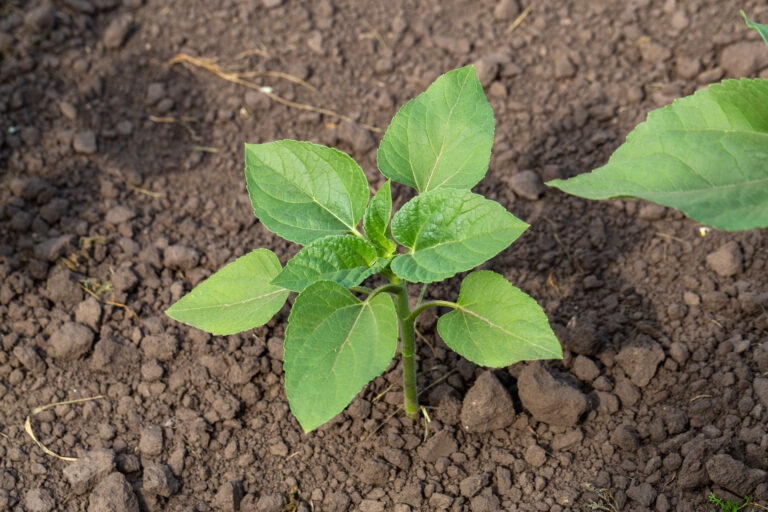
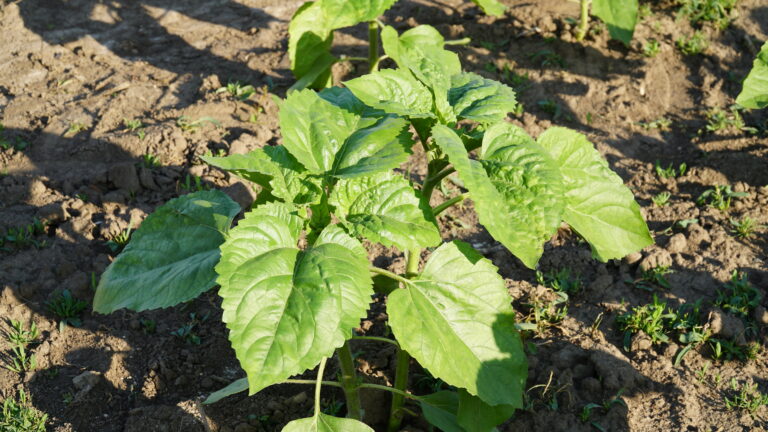
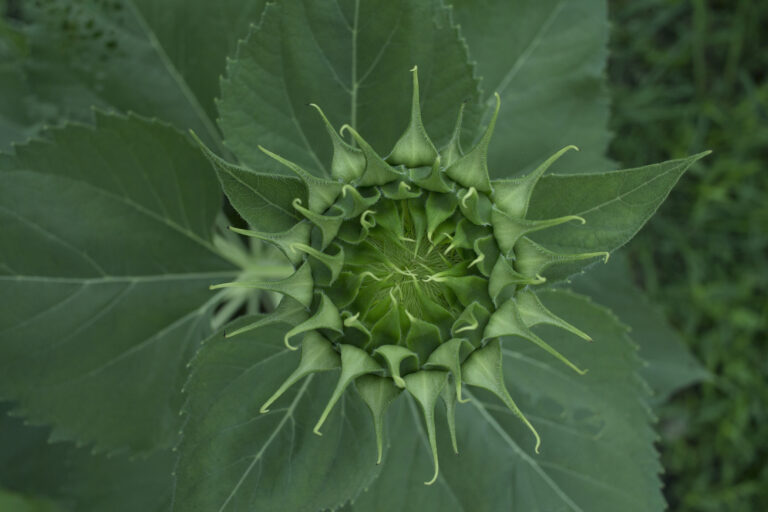
The table below provides an overview of the recommended product applications throughout crop development. It shows which product to apply, the appropriate timing and the method of application. This helps ensure that your crops receive the right support exactly when they need it.



Reach out today to explore the right solutions for healthier soil, stronger crops, and bigger yields. Your next harvest starts with Grogreen.

Do you wish to review the complete Gro Green catalogue or would you prefer to receive specific and more detailled information about one of our products?



