
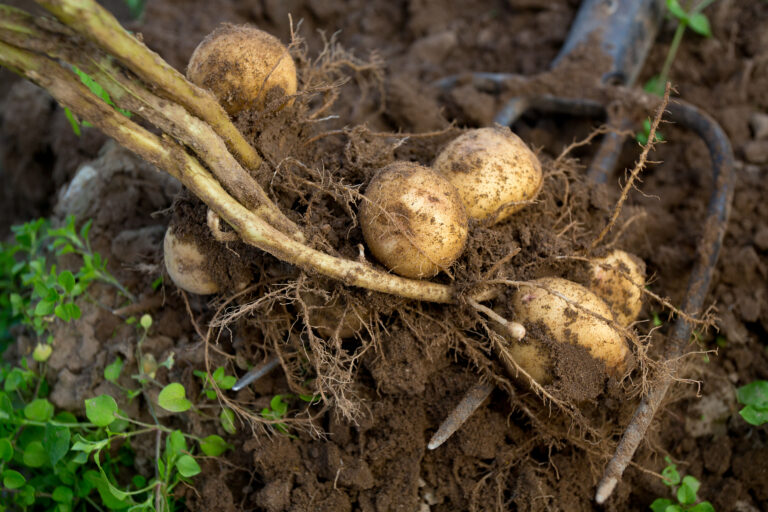
The potato (Solanum tuberosum) is one of the most essential and high-yielding food crops in the world, serving as a primary source of carbohydrates and nutrition across various climates. As a member of the Solanaceae family, it is cultivated for its underground starchy tubers, which are specialized storage organs.
Agronomically, the potato is a cool-season perennial grown as an annual, characterized by a complex developmental cycle that includes sprout development, vegetative growth, and tuber initiation. The plant’s productivity is heavily influenced by the “bulking” phase, where carbohydrates are translocated from the leaves to the tubers. Establishing a consistent growing environment—from pre-sprouting seed tubers to managing soil moisture during tuber set—is the first step in ensuring a high-quality, disease-free harvest.

Potatoes are cool-weather crops that perform best when daytime temperatures stay between 18°C and 22°C. While they require full sun for vegetative growth, they are highly sensitive to high soil temperatures; if the ground stays above 24°C, tuber stolon growth stops, and the plant may fail to set tubers entirely. They require a frost-free growing season of 90 to 120 days, depending on the variety, and are most productive with well-distributed rainfall or irrigation of 500 mm to 700 mm during the season.
This crop performs best in moderate to high relative humidity, ideally between 60% and 80%, which supports steady transpiration and keeps the foliage lush. However, high humidity (above 90%) combined with moderate temperatures creates the perfect environment for Late Blight (Phytophthora infestans), the most devastating fungal-like disease for potatoes. Maintaining good plant spacing and avoiding overhead irrigation late in the day are essential strategies to keep the canopy dry and reduce disease pressure.
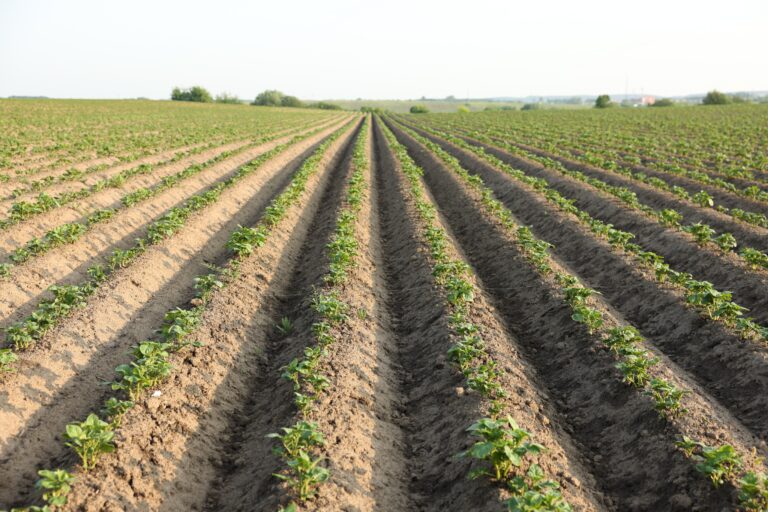
The ideal soil is a loose, friable, and well-aerated sandy loam or silt loam that can accommodate the plant’s relatively shallow and fibrous root system and allow for unhindered tuber expansion. Potatoes are highly sensitive to soil compaction and “cloddy” soil, which can result in misshapen tubers and difficult harvests. They require excellent internal drainage to prevent “hollow heart” and various soft rots, yet the soil must have enough organic matter to retain the consistent moisture needed for tuber bulking.
For optimal yield and tuber health, maintain a moderately acidic pH between 5.0 and 6.0. This acidic range is vital for the plant’s health and marketability; if the soil pH rises above 6.5, the crop becomes highly susceptible to Potato Scab, a bacterial disease that causes unsightly lesions on the skin. While potatoes can grow in more neutral soils, keeping them on the acidic side is a standard management practice to ensure clean, smooth-skinned tubers.
The table below provides an overview of the recommended product applications throughout crop development. It shows which product to apply, the appropriate timing and the method of application. This helps ensure that your crops receive the right support exactly when they need it.




Reach out today to explore the right solutions for healthier soil, stronger crops, and bigger yields. Your next harvest starts with Grogreen.

Do you wish to review the complete Gro Green catalogue or would you prefer to receive specific and more detailled information about one of our products?



