Watermelon (Citrullus lanatus) is a major warm-season fruit crop belonging to the Cucurbitaceae family, widely cultivated for its high water content and sweet, crisp flesh. Originally from the tropical and subtropical regions of Africa, it has been developed into numerous cultivars, including seeded, seedless (triploid), and miniature varieties.
Agronomically, watermelons are trailing annual vines characterized by their expansive growth habit and high demand for solar radiation. Unlike many other melons, they require a significantly longer growing season and higher cumulative heat units to reach full maturity. They are primarily monoecious, though seedless varieties require the presence of diploid “pollinizer” plants and active bee populations for successful fruit set. Establishing a consistent environmental balance—particularly regarding soil warmth at planting—is the first step in avoiding stunted growth and ensuring uniform fruit size.
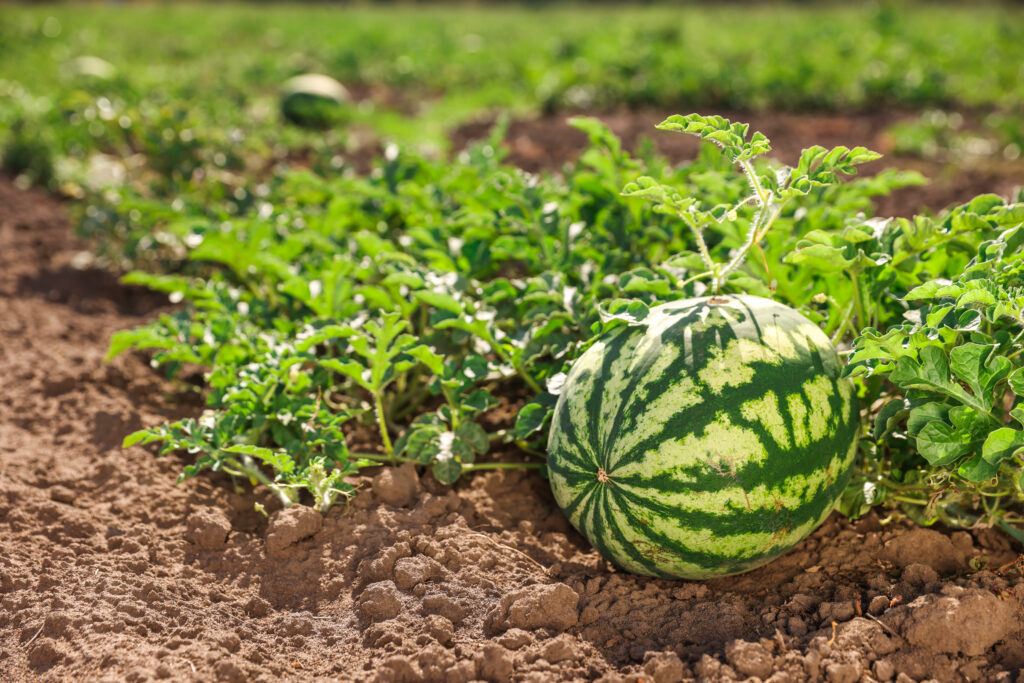
Watermelons are high-heat crops that thrive in temperatures between 24°C and 35°C. They are more heat-tolerant than most other cucurbits but have zero tolerance for frost; growth effectively stops if temperatures drop below 15°C. They require a long, frost-free season—typically 80 to 100 days—and intense sunlight to facilitate the high rate of photosynthesis needed for sugar accumulation. While the plants are relatively drought-tolerant once established, consistent moisture is critical during the fruit-set and early bulking stages.
This crop performs best in low to moderate relative humidity, ideally between 50% and 65%. While the plants require high soil moisture, high atmospheric humidity (above 75%) increases the risk of foliar diseases like Anthracnose and Gummy Stem Blight. Low humidity during the final ripening phase is particularly beneficial, as it helps concentrate sugars and prevents the fruit from developing a “watery” or bland flavor profile.
The ideal soil is a deep, well-drained sandy loam or alluvial soil that can accommodate the plant’s powerful and deep taproot system, which can extend over a meter into the ground. Watermelons are highly sensitive to “wet feet”; poor internal drainage quickly leads to root rot and vine decline. They are “heavy feeders” that thrive in soils with high organic matter, but they require a loose soil structure to allow for the rapid expansion of both the roots and the heavy fruit.
For optimal growth and nutrient uptake, maintain a slightly acidic pH between 6.0 and 6.8. Within this range, the plant can effectively access the phosphorus and micronutrients required for flowering and fruit development. If the soil becomes too acidic (below 5.5), the risk of Fusarium wilt—one of the most devastating soil-borne diseases for watermelons—increases significantly, and the plant may suffer from manganese toxicity.
The table below provides an overview of the recommended product applications throughout crop development. It shows which product to apply, the appropriate timing and the method of application. This helps ensure that your crops receive the right support exactly when they need it.
Reach out today to explore the right solutions for healthier soil, stronger crops, and bigger yields. Your next harvest starts with Grogreen.

Do you wish to review the complete Gro Green catalogue or would you prefer to receive specific and more detailled information about one of our products?