
The cucumber (Cucumis sativus) is a major warm-season vegetable crop in the Cucurbitaceae family, widely grown for its high water content and crisp texture. Originally from the tropical regions of Southern Asia, it has been developed into numerous agricultural varieties, including slicing, pickling, and greenhouse-specific cultivars. Because cucumbers have a very high growth rate and consist mostly of water, maintaining precise thermal units and consistent moisture is the most critical factor for a marketable harvest.
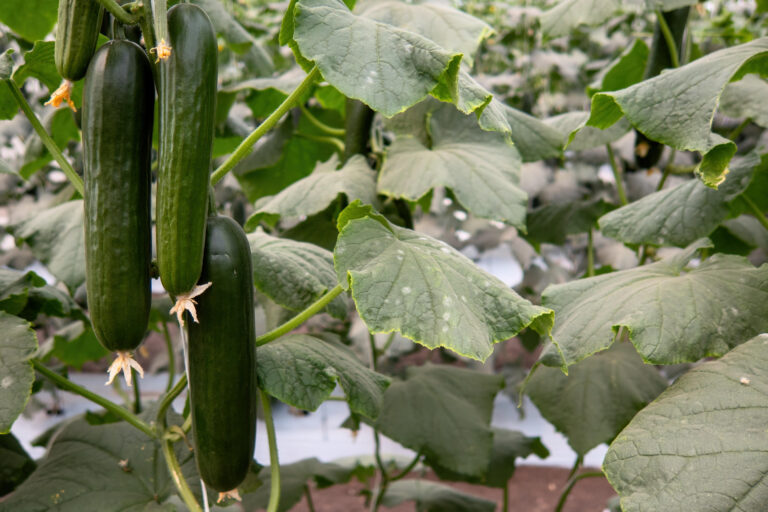
Agronomically, cucumbers are fast-growing annuals that can be cultivated as trailing vines or trained vertically on trellises to save space and improve fruit quality. They are highly sensitive to environmental stress, which can quickly trigger the production of cucurbitacin—a natural compound that makes the fruit taste bitter. Establishing the correct balance of heat and high-frequency irrigation is the first step in ensuring a high-yielding crop with uniform fruit shape.

Cucumbers are heat-loving plants that thrive when daytime temperatures are between 24°C and 30°C, and they require a minimum soil temperature of 18°C for successful establishment. They have zero frost tolerance and will stop growing or suffer leaf damage if air temperatures drop below 13°C for extended periods. To support their rapid vegetative expansion and fruit set, they require full sun exposure, typically needing at least 8 to 10 hours of high-intensity light daily.
These plants perform best in high relative humidity, ideally between 60% and 85%, which prevents the thin, large leaves from wilting and supports steady fruit expansion. However, in greenhouse or high-density field environments, humidity levels exceeding 90% can lead to outbreaks of downy mildew and anthracnose. Proper ventilation and leaf-dryness management are essential to balance the plant’s moisture needs with disease prevention.
The ideal soil is a loose, fertile, and well-aerated sandy loam that can accommodate the plant’s powerful and deep root system, which is highly efficient at water uptake. Cucumbers are “heavy feeders” that require high levels of decomposed organic matter to sustain their fast-paced production cycle. While they need a constant supply of water, they are extremely sensitive to “wet feet,” so the soil must have excellent internal drainage to prevent root suffocation.
For optimal growth and fruit quality, maintain a slightly acidic to neutral pH between 6.0 and 7.0. Within this range, the plant can effectively process the nutrients required for its rapid metabolic demands; if the soil becomes too acidic (below 5.5), growth is often stunted and the plant may become more susceptible to soil-borne pathogens.
The table below provides an overview of the recommended product applications throughout crop development. It shows which product to apply, the appropriate timing and the method of application. This helps ensure that your crops receive the right support exactly when they need it.


Reach out today to explore the right solutions for healthier soil, stronger crops, and bigger yields. Your next harvest starts with Grogreen.

Do you wish to review the complete Gro Green catalogue or would you prefer to receive specific and more detailled information about one of our products?



